How does the Soil impact the Product?
In a Glass
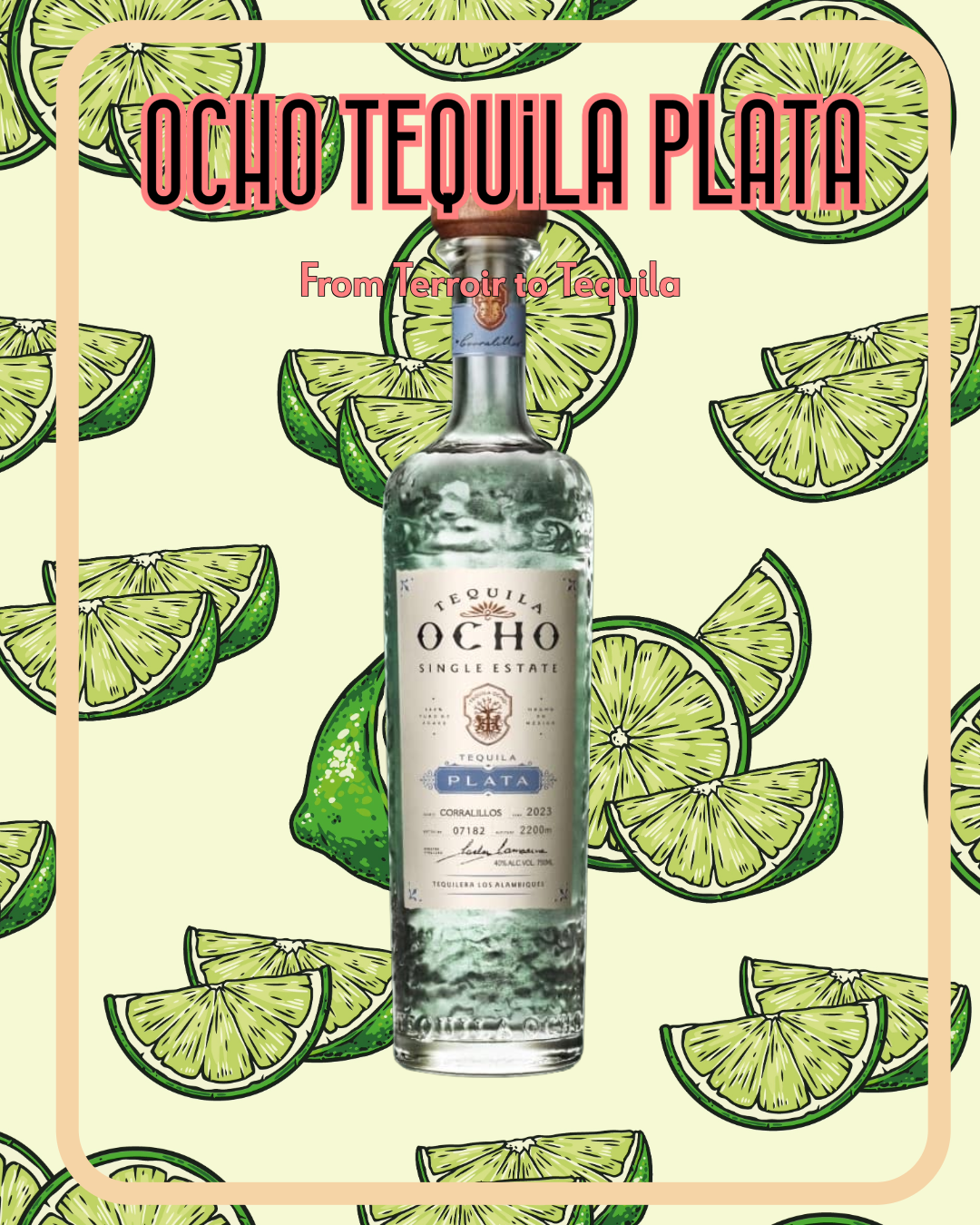
Product: Tequila Ocho Plata
Origin: Los Altos de Jalisco
Category: Blanco Tequila
ABV: 40 %
Agave: 100 %Blue Weber Agave
Tasting Notes
Appearance
Crystal clear
Nose
fresh, clear agave, vibrant citrus notes, fresh, herbal notes, white pepper, mineral notes
Palate
robust, complex notes of cooked agave, develops from front to back, freshly cut grass, slight earthiness
Finish
long, harmonious, lingering agave flavors, slight earthiness
Production
Like every Tequila, Ocho uses the Blue Weber Agave, most of them growing around Los Altos de Jalisco. For 7 to 10 years the plants mature until they are overripe. A lot of the fields are located around Arandas, a region with mineral soils. Ocho Tequila follows the principle „One field at a time.“ That ensures that the Terroir can make an impact in the taste of this Tequila, because Ocho doesn’t simply mix agaves from a large region together, every field has its own soil, its own microclimate, level of sunlight exposure, that’s why the agaves taste different from field to field. According to them, the conditions in Arandas lead to softer, rounder, and fruitier Tequilas.
The harvest is carried out by jimadores, with the Coa de jima, a steel piece with a sharp round knife on the end of a wooden handle, they take off the leavs/pencas till the heart of the agave is left, the piña.
At the distillery, the piñas get slowly cooked in traditional Brick ovens, the process takes about 48 hours, but they rest and cool down for another 24 hours in the oven.
The cooked agaves get shredded in a roller mill, the fibers are crushed, and the sweet agave juice is released. The juice then goes into wooden vats or spanish Pipones where the fermentation takes place; it’s a natural and open fermentation with airborne yeast and takes about 100 hours.
With the end of the fermentation the Mosto Muerto is gonna get distilled for Ocho Tequila they destill it twice in Copper Pot Stills, with the second distillation being carried out in a smaller still made entirely of copper. High levels of contact with copper are intended to remove unwanted compounds and a slow distillation with low temperatures should insure that as much as possible taste and aroma of the agave is preserved in the spirit.
History
The founding of Tequila Ocho takes place in 2008, a relatively young brand by industry standards.
Two central figures in this story are Carlos Camarena a fifth-generation agave farmer and third-generation tequilero and Tomas Estes an american restaurateur and a wine and tequila expert. Ocho was born from the combination of Carlos Camarena’s deep knowledge of agave and tequila production and Tomas Estes’ interest in tequila, culture, gastronomy, and wine.
The idea behind Ocho was the question: Can you smell Terroir in Tequila? Tomas Estes was strongly influenced by the french wine culture, he spent many years in europe and developed a connection to wine and the concept of terroir, particularly through his stays in France. For wine it’s normal to talk about Terroir, differences in soil, microclimates, sunlight exposure, temperatures, etc., result in grapes from different vineyard sites tasting different. Estes wanted to try if this also happen to Tequila and works with agaves. He came to the conclusion that it works. Estes describes it this way, for example
Tequila Valley tends to be earthier, herbal, bolder and Los Altos tends to be sweeter, softer, fruitier. The Camarena family owned or managed approximately 40 different agave plantations at that time. When Tomas Estes proposed bottling tequila from individual *ranchos* separately, analogous to a single-vineyard wine, Carlos and Felipe Camarena initially asked themselves, “Why not?” This ultimately gave rise to the single-estate concept behind Ocho.
During the development of the tequila, Carlos Camarena the Master Destiller and Tomas Estes experimented with various distillation methods.The preferred version was Trial number eight or in spanish Ocho. The name is thus not intended to refer primarily to a region, family, or agave variety, but rather to the eighth attempt that they favored during development.
In 2013, Tomas Estes published the book “The Tequila Ambassador”, in which he explores the production, history, and culture behind tequila. He was also appointed Official Tequila Ambassador to Europe by the Mexican National Tequila Chamber for his work. Sadly, he passed away in 2021. His son Jesse Estes is carrying on his legacy at Ocho Tequila.
My Take
Tequila Ocho Plata is super soft and round but still has the notes from agave, pepper and a little bit of earthiness in the finish. It’s a blanco tequila that can be sipped with pleasure but also works beautifully in cocktails. I prefer blanco tequilas anyway and Ocho made with its product a beautiful sipper.
The spirit industry lives from people with a vision and the courage to try something new or do something differently. In 2008 talking about Terroir in another topic then wine was often dismissed with a shake of the head or viewed as a marketing ploy. Tomas Estes proved it there’s Terroir in Tequila and you can taste it.
Best Used In
neat
Paloma