Tequila is one of the most misunderstood spirits. There is a reason why this Mexican export is such a hit.
For many people, tequila is just a shot to be drunk with lime or lemon and salt. They couldn’t be more wrong.
Tequila is culture; tequila is a pleasure to be savored—whether enjoyed neat or in a cocktail.
In a Glass
Category: Tequila
Country of origin: Mexico
Place of origin: state of Jalisco, additionally parts of Guanajuato, Michoacán, Nayarit, Tamaulipas
Minimum ABV: Min. 35 % vol (Mexico), mostly 38–40 % vol for Export
Aging: Blanco / Silver / Plata 0 to 60 Days
Reposado min. 2 Months
Añejo min. 1 year, max. 3 years
Main Ingredient: Agave (Agave tequilana Weber var. azul)
Regulations: Consejo Regulador del Tequila (CRT), under standard NOM-006-SCFI-2012
What Makes Tequila Different?
Tequila has carried a Denominación de Origen since 1974, legally it can only be produced in Jalisco and in parts of Guanajuato, Michoacán, Nayarit, Tamaulipas. Agave tequilana Weber or Weber Azul is the only plant that can be used to make tequila. Everything is regulated across 23 pages under NOM-006-SCFI-2012, or at least most of it. That said, to be honest, certain points can be interpreted and construed in different ways.
Unfortunately, many people still associate tequila with the style prevalent in the 90s and 2000s. Mixto tequilas with that distinct alcoholic bite. A party drink meant to be downed as shots; just add a quick pinch of salt and a wedge of lime or lemon, or anything sour to bite into to mask the taste.
The 90s and 2000s are gone and the quality of Tequila available changed for good.
How Is Tequila Made?
We have to start with the main ingredient, the Agave. An often underestimated factor with tequila is the time it takes for the raw material to be ready, this duration differs significantly from, and is far more substantial than, that of other products. On average, the plant takes about 7 to 12 years to mature, and under certain circumstances, up to 14 years.
If the Agave is ready Jimadores step in and remove about 200 leaves using a “coa”, a sharpened disc at the end of a pole, to reach the heart of the agave, the “piña”. Timing is crucial for this undertaking, as the plant’s sugar content is highest just before it blooms.
Huge respect to the Jimadores for their hard work, agave leaves are sharp and pointed. Then there is the weight of the plant, a “piña” averages between 30 and 70 kg, and in some cases can even reach up to 100 kg. It takes about 7 kg of the agaves heart to produce one liter of tequila.
Cooking the Agave is the next step in the production of Tequila. Cooking is crucial because the process converts starch into sugar. Traditionally, agave hearts are cooked in stone or underground ovens, whereas autoclaves represent a more modern solution. With the traditional method, the lower cooking temperature, ranging from 65 to 95 degrees, results in a cooking time of approximately 24 to 36 hours. In contrast, modern autoclaves operate at higher pressures and temperatures, around 120 degrees, so the cooking time is naturally shorter.
Finally, the cooked “piñas” are crushed and pressed to extract the juice, known as “mosto” or “aguamiel”. Traditionally tahonas, large, round stones drawn by mules or oxen, are used. In the modern process, the cooked hearts are first broken down in a shredder (the “desgarradora”) and then pressed using a roller mill.
The “mosto” is subsequently fermented, usually in large wooden vessels or stainless steel tanks. Depending on the producer’s philosophy and the specific product, the “mosto” undergoes either spontaneous fermentation or fermentation initiated by the addition of yeast. Depending on the method used, fermentation lasts anywhere from one to twelve days. The resulting alcoholic juice has an alcohol content of approximately 4% to 7%.
Tequila is usually distilled twice, though in rare cases it is distilled three times. The stills are made of copper or stainless steel, and column stills are also used. According to regulations, the distilled tequila must not exceed 55% ABV prior to dilution.
Types of Tequila
Blanco / Silver / Plata
unaged or rested up to about 60 days, straight off the still.
Joven / Gold
usually a blend of Blanco and an aged tequila, often Mixto, frequently colored or flavored.
Reposado
“rested” at least 2 months in oak.
Añejo
“aged” at least 1 year, up to 3, in oak barrels no larger than 600 liters.
Extra Añejo
at least 3 years in oak, only introduced as an official category in 2006.
100% Agave vs. Mixto
100% Agave Tequila: 100% of the fermented sugar must come from agave, and the final product must be bottled in Mexico.
Mixto Tequila: 51% of the fermented sugar must come from agave, while the remainder can come from other sugar sources; additionally, the final product can be shipped and bottled elsewhere.
Additives: what’s allowed
According to the rules of the CRT (Consejo Regulador del Tequila), tequilas may contain up to 1% of approved additives without the need for label declaration. Caramel coloring, oak extract, glycerin, and sugar-based syrups are frequently added. This is permitted even for 100% agave tequilas.
What Does Tequila Taste Like?
Flavor shifts significantly by aging category:
Blanco
fresh, citrus-forward, peppery, with the agave itself front and center.
Reposado
lightly woody, with vanilla and spice starting to show through.
Añejo
smoother and more complex, often described with notes of toffee, cocoa, and leather.
Extra Añejo
rich and layered, with chocolate, wood, and dried fruit; some longtime drinkers argue the agave character fades too far behind the oak past the three-year mark
A Brief History
The agave is deeply rooted in Mexican culture. The plant was widely used long before the existence of tequila, Mexican natives utilized it to produce “pulque”, a fermented agave sap, but it served other purposes as well, including the manufacture of ropes and needles and use for medicinal purposes.
With the arrival of Spanish settlers in Mexico, the fermented agave sap was increasingly distilled and processed into “vino de Mezcal”. However, colonial authorities occasionally banned production, forcing it underground.
The first official distillery was established in Jalisco in 1600 by Don Pedro Sánchez de Tagle. Over the course of that century, new tax regulations legalized production once more, and the drink as we know it today began to take shape in the town of Tequila itself.
In 1758, the Cuervo family received the first official land grant for agave cultivation from the Spanish Crown. During the 19th century, brands such as Cuervo and Sauza played a pivotal role in making the drink internationally known; Sauza, in particular, began marketing it under the name “tequila.”
Following the Mexican War of Independence (1810–1821) and the fall of the Porfirio Díaz dictatorship in 1911, tequila was declared Mexico’s national drink. Mexican cinema in the 1930s and 1940s cemented its popularity at home.
Its major breakthrough in North America occurred during and after World War II, driven largely by the Margarita cocktail.
In 1974, Tequila was granted the status of a protected designation of origin (*Denominación de Origen*).
The introduction of the “Extra Añejo” category in 2006 marked a shift in image, moving away from tequila as a mere “shot” drink and toward tequila as a spirit to be savored. This trend continued with the proliferation of celebrity products, spearheaded by George Clooney and Rande Gerber, though the first celebrity tequila was arguably Cabo Wabo, launched by Sammy Hagar, the former lead singer of Van Halen.
How Do You Drink Tequila?
It can be enjoyed:
neat mostly as anejo
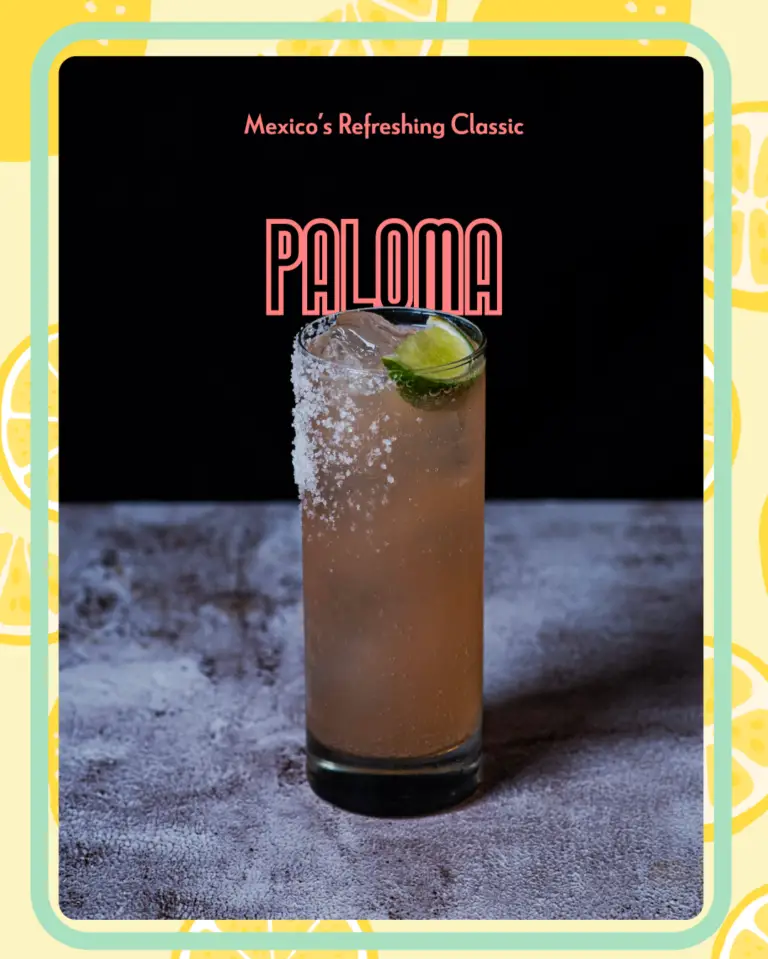
in a highball like the Paloma
or a refreshing Margarita
How I Like to Drink Tequila?
I might be a bit particular about this, but I always prefer a blanco over an añejo or extra añejo, I simply enjoy that freshness and those light notes of pepper and citrus more.
for the refreshment
Ranch Water – Just Tequila, lime and soda, pure refreshment for a day at the ranch
Original Tequila Sunrise – No orange juice, Tequila, Creme de Cassis, Pomegranate and Soda, you need to try it.
Nautilus – Tequila, Cranberry juice and lime a Trader Vic Original .
for sipping
Margarita – Tart, refreshingly citrusy, a classic for a reason.
Mexican Old Fashioned – half Reposado Tequila, half Mezcal, Lime and Celery bitters and a bit of sugar.
Rosita – something for aperitivo, Tequila, dry and sweet Vermouth and Red Bitter.
Final Thoughts
Tequila – the ultimate party shot. I remember back in the 2000s, I once had the pleasure of drinking tequila with a Mexican exchange student. Her reaction was: “What did we just drink? That was anything but tequila.”
Fortunately, those days are over, and tequila no longer stands for parties with sticky floors and a headache the next day.
Instead, it represents enjoyment.
The agave is deeply integrated into Mexican culture. One tends to a plant for years, only to produce a drink that deserves to be savored rather than just knocked back.